
Advanced & Defensive Driving Courses Belfast
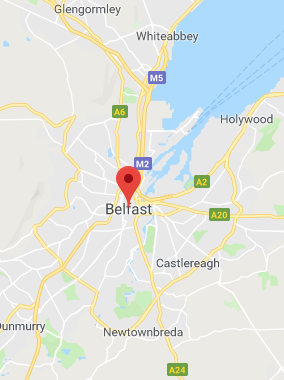 We offer advanced driving courses in and around Belfast. Our courses are designed for companies that want to reduce the road risk associated with their drivers. Training can be split on a 1:1 or 2:1 basis. We offer training to private individuals, too.
A 1:1 basis involves one tutor training one driver for a half-day or full-day session. The 2:1 format is ideal for companies that have multiple drivers to train. The 2:1 basis involves training one driver in the morning for 3.5 hours and another in the afternoon, per tutor.
We provide bespoke advanced/defensive driver training to companies and private individuals using our national network of DVSA-registered advanced driving instructors.
What We Train:
We cover a wide range of elements during the training. To start, there is an initial assessment, allowing our tutors to evaluate the driver’s level of ability. After a debrief, the training starts. We look at the following:
1. Observation and Anticipation
2. Car control
3. Speed awareness
4. Rules of the road
5. Developing a positive attitude
6. The System of car Control – Used by the Police
7. The Limit Point – and other advanced techniques

Remember – Each driving course is totally bespoke to your own specific needs and requirements. This applies to both our business and private client courses.
.
Course Duration:
Whether you are a business client or a private individual, we offer a range of specialist courses designed to enhance the skills and safety of drivers. Our courses are available for car and van drivers.
3.5hr – Around 30% opt for this course. The benefits of this course are that it’s the cheapest, and is only 3.5 hours; the disadvantages are that for some drivers it’s too short. Ideal mainly for companies training four or more drivers.
2 x 3.5hr – This is advantageous for customers who can’t drive for 7 hours and need the split to reflect. Often, a driver receives homework for this session, allowing them to practice what was taught in Session 1 and prepare for Session 2. Older drivers often opt for this course.
7-hour full day – Although it is hard work for some, a full day is cheaper than two 3.5-hour sessions. It’s good for those who are time-poor. Perhaps your company has requested that you take this course, or perhaps you believe a 7-hour course would be more suitable for you. Talk with us if you are unsure.
We understand not all drivers want half, full or two half days. Some need or want longer. That is why we offer 3, 4, and 5 x 3.5-hour sessions. These courses are often run over a few weeks and are mostly designed for drivers who have significant issues, such as a driving phobia, or need confidence training after a serious road traffic collision.
For all our bespoke driving courses in Belfast, we provide training on a range of roads and different areas, which can include:
Motorway training – Four motorways meet in Belfast: the M1, M3, and the M2, which merge into the M5 to the north of the city. These motorways are fast and busy, and many accidents have been reported around the junctions where drivers enter and exit at high speeds. To use motorways confidently is essential if you need to drive to locations directly and quickly, and learning how to use fast routes can be a struggle for many drivers. With some extra advanced driver training, we can help any driver understand the regulations of motorway driving. With some specific car control techniques as taught to the police and paramedics, such as IPSGA – information, planning, speed, gear and accelerate, will help with motorways and all other aspects of your driving, whatever road you are on. We have trained many drivers, from newly qualified drivers on their first motorway journeys, to drivers who do not have to use motorways for work or family purposes.
Rural Roads – There are many miles of rural roads surrounding Belfast, and although they may be picturesque, they can be hazardous if a driver is unfamiliar with navigating them. Rural roads have many issues, including seasonal changes where lanes may be flooded or impassable due to tree falls or ice, making journeys particularly challenging in adverse weather conditions. Other problems include loose animals on the roads around farming communities, and it is crucial to be aware of horse riders, cyclists, and pedestrians who may also be using the lanes. Some of the worst areas affected by accidents are the B170 towards Bangor and the A43 to Derrybogey; many of these accidents involve young drivers who sometimes take unnecessary risks. Rural roads often have minimal street lighting and few warning signs, so understanding and respecting rural driving is crucial.

Urban Training – Belfast is one of the busiest cities in the UK, and the urban network of roads can be hectic, especially during rush hour traffic. Many accidents occur on the A12 and A2 ring roads, as well as on the streets surrounding the city centre. Urban driving requires good patience, thorough all-around observations, and clear indications to ensure other drivers can see your intentions. The main areas where accidents occur on urban roads are roundabouts and traffic light junctions, where drivers are not paying enough attention and are impatient to reach their destination. Drivers must understand the basics of urban driving, mirrors, signals and manoeuvres.
Talk to us:
You can email or call us – we will ensure your enquiry is dealt with quickly and efficiently. If you have a specific request, please let us know. We have provided courses for a vast range of business and private clients. Furthermore, if you are ready to book, you can do so online at www.advanced-driving.co.uk/book. After booking, a member of our team will be in touch within 1hr during working hours.